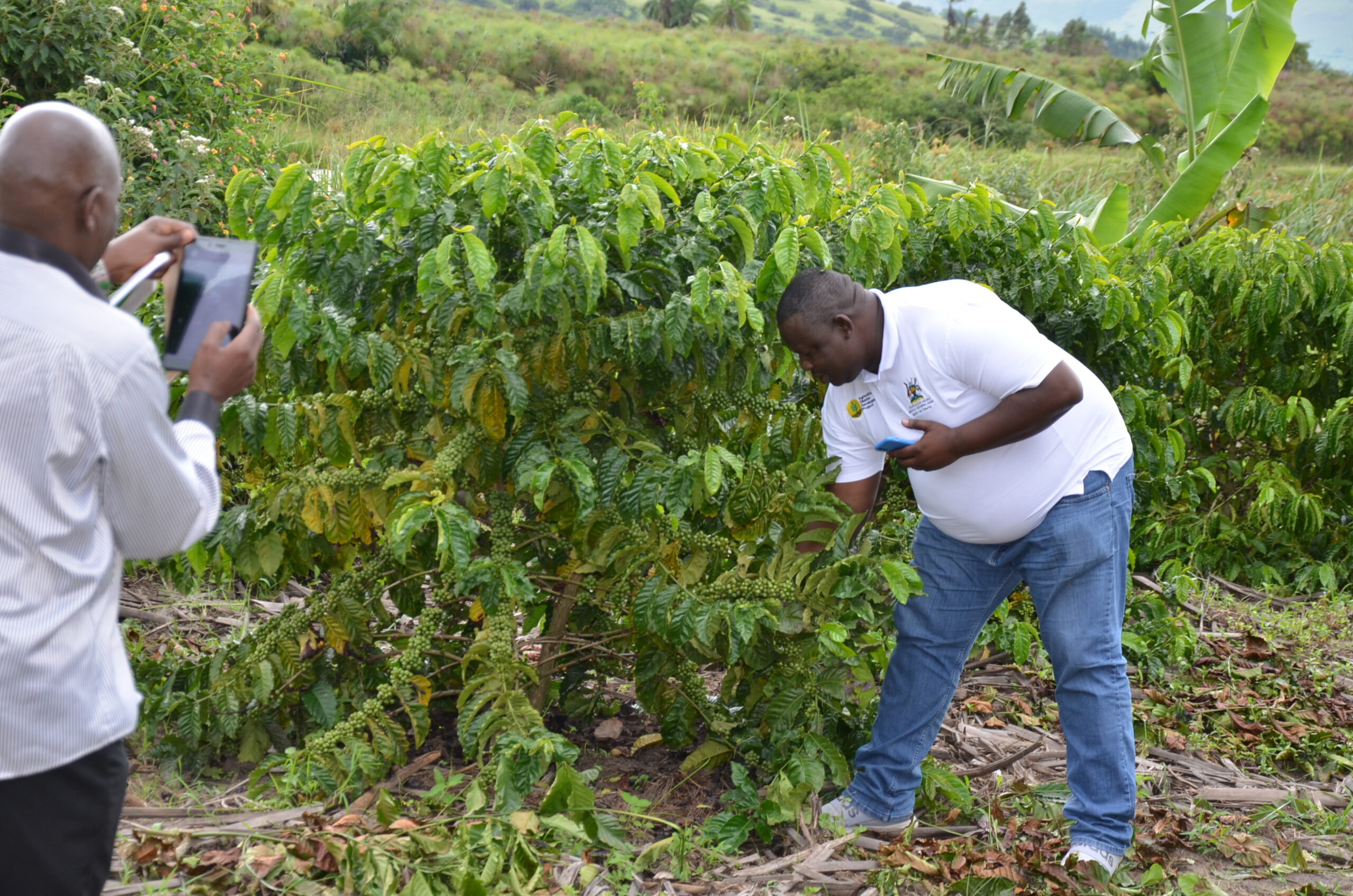

With hundreds of farmers now embracing coffee growing courtesy of the South Ankole diocese’ Bishop Nathan Ahimbisibwe initiative, a great stride in growth has been witnessed at the Kyamate hill where the project started from.
The diocese started coffee plantation growing in 2019, with the Bishop Rt Rev Nathan Ahimbisibwe announcing the commencement of a Coffee growing project at all idle diocesan land, both at the diocesan headquarters, Kyamate and all Anglican churches in the diocese.
Now the diocese boosts of up to 300 acres of reaping over 100 tones a season.
“Our plan was to boost coffee production but also show our people that it’s possible to have income from a crop like coffee. We knew that we can liberate our churches from begging if we plant coffee but also some individuals can learn from us and those with land plant more coffee that we can have a good harvest.” Bishop Ahimbisibwe says.
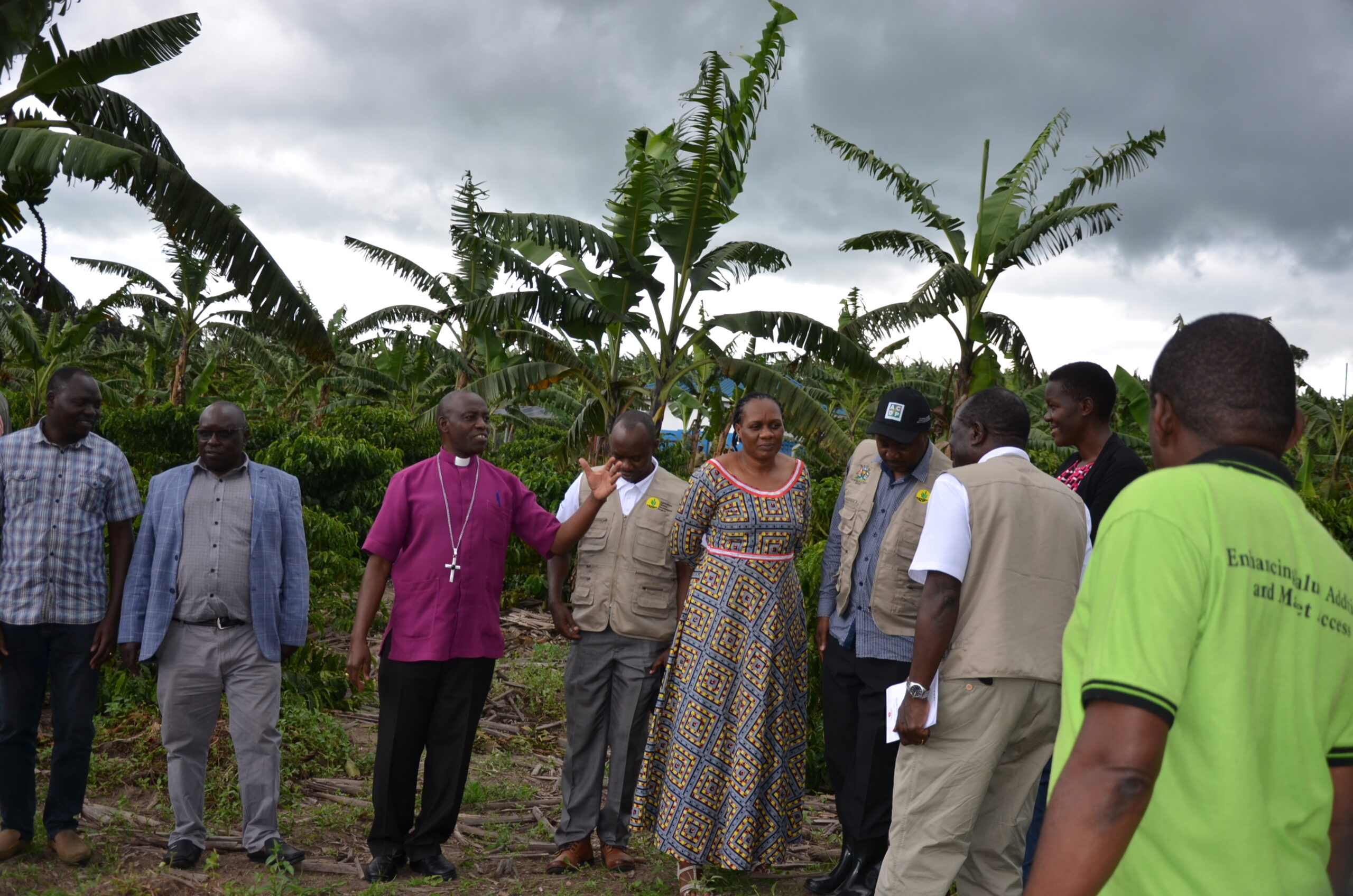
From the initiation, several diocese, government agencies and groups of people have visited the project spiraling the growing initiative.
“We have now set up a processing plant courtesy of the province of the Church of Uganda and NAADS, we have the best huller that also grades. We have established a centre of excellence in post-harvest handling and we wish to set a pace in coffee value chain. I must tell everyone that coffee is a great crop and a great business. Coffee can never fail you. We invite everyone to grow coffee.” Bishop Ahimbisibwe says.
At least 200 churches have coffee plantations and several individuals have planted coffee copying from the diocese’s initiative.
“When we saw the Bishop growing coffee, as parish we also started our own farm, we are not regretting. The bishop has been a good example of development. As the parish, we now have over 70 acres of coffee, and this is helping us in many projects including construction of the church.” Rev Fr Oscar Ahimbisibwe the Parish priest Kishariro Catholic parish noted.
Rev Fr Conrad Nkamwesiga of Kagamba Parish says they started redeveloping the coffee farm at the parish also growing new crop getting example from the modern coffee farm of the South Ankole Diocese.
Rev Ezra Mwesigwa, the All saints parish (Anglican) Ntungamo says he copied from the diocese farm and started his own private coffee plantation at his family land which he is reaping big.
“When I saw the diocese growing coffee, I thought I can also do it. I went back home and tilled our family land. I established 27 acres of coffee. I have now made the second harvest and harvested over 100 bags. I hope to be harvesting over 500 bags in the coming seasons. While the prices have gone down,, but I can’t be like someone who has nothing to sell.” Rev Mwesigwa says.
Tens of laborers are employed in the Diocesan coffee farm daily through the year for different activities.
Mr Jimmy Ngabirano, the estates officer for the diocese says at least 30 people are in the plantation daily.
“We have employed 20 people to permanently take care of coffee and what is in it. We have an irrigation and general water system, we have those responsible for weeding, pruning and most especially we must have a lot of people when it comes to harvesting. There we must have at least 50 people every day.” Mr Ngabirano says.
Bishop Ahimbisibwe says they are in last stages of establishing greater Anglican Church coffee cooperative that would be directly adding value and directly exporting coffee. The cooperative shall have the many churches as out-growers but also have individual farmers as members.
The Growth
A blessing of coffee, the ministry of Agriculture provided the farm with water for irrigation and domestic use. The frist project was an underground water system that also supplies the entire Kyamate hill with clean water. The second project a small scale irrigation project constructed a dam. The dam has been developed as a fish pond with over 10000 fish.
The water for irrigation is available all year through and everyone believes this is the most successful project implemented in Ntungamo under the micro irrigation and fish farming.
The establishment of the modern coffee huller and processing centre has increased business with most farmers bringing in coffee for processing at the centre. The coffee factory cum processing centre will have a modern drier, store and huller. There is also a chance that the coffee here shall be processed fully to have it exported after a fair touch.
The diocese has become one of the great training centres for Agriculture with over 1000 people visiting the farm each year to see the magic the Bishop is using to have a successful coffee growing business. The business is projected to uplift the church and make them great donors as well as improve the welfare of priests and general church leaders.
As a training centre, the church has since developed a guest house, managed by the Mother’s union and are constructing training halls and dinning’s for the guests expected near the Mother’s Union centre.
With the third reaping season done, money cannot be revealed, but everyone knows a lot was harvested and the church is richer than it ever was.
However bishop Nathan believes the peak has not been reached where billions of money shall be harvested from the coffee that will change the thinking of many but also improve the church.
.Rev Edmund Mwesigwa, the Diocesan estates coordinator says the diocese expects at least 10000 tons of Coffee every year at peak harvest.
Mr Nelson Tugume, the CEO Inspire Africa notes the potential and inspiration of the Church’s coffee growing.
“Everything the church does is trusted by believers, they are great drivers of development in every part of the world. I was inspired by what Bishop Ahimbisibwe was doing to venture into coffee growing and processing. Uganda has a big potential and with many farmers engaged we can have coffee as our Gold. We look on to church to engaged more farmers and publicize the growing as much.” He says.
Several diocese in the province have visited South Ankole and started growing coffee on the diocesan land. Ankole Diocese, North Kigezi Diocese and Kinkizi diocese have since established farms.
The Ntungamo district Agriculture officer Ms Esther Atwiine says the diocese’s engagement in coffee production has had greater impact on coffee volumes.
She notes that coffee production has since 2020 grown by over 60% and there is more hope of increasing more.